Tuesday, May 2, 2017

My Successful Adieu of Science Methods

My Successful Adieu of Science Methods

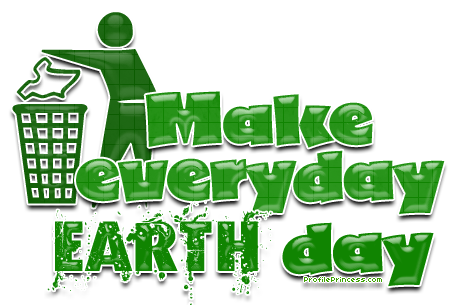
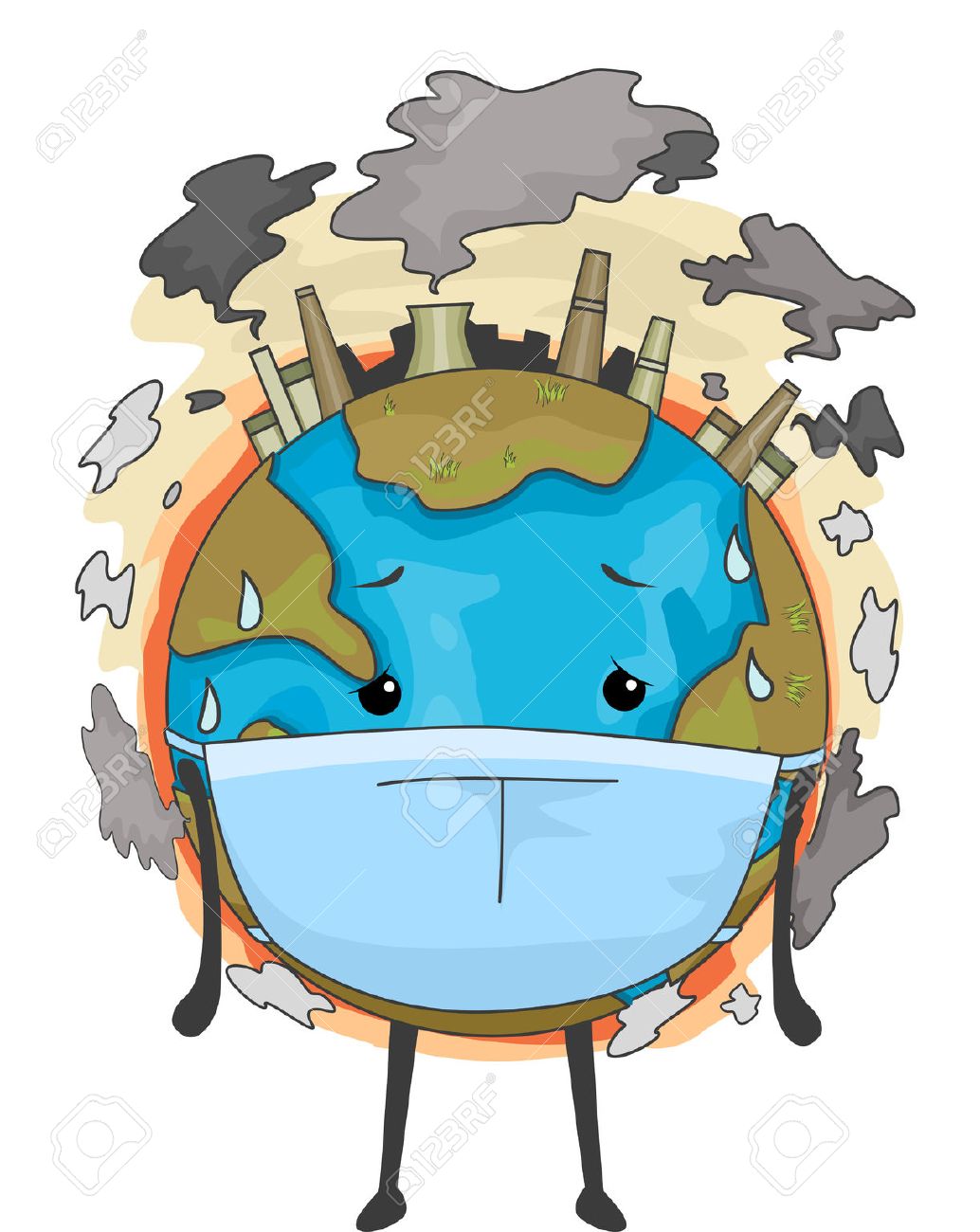
       I'm graduating this semester and I could not be happier to say that I am glad that I am ending this semester with Dr. Smirnova and Science Methods. Thinking about science as a topic, I didn't doubt that I was capable of learning the material and implementing lessons, but I wasn't confident. I felt the same way in Social Studies. Upon reaching the ending, I can honestly say that I am about ten times more confident now than I was before. The picture to the left reflects on my Unit Plan for this class because pollution and recycling are such a major issue especially when thinking about the purpose of Earth Day. I'm thankful for this learning experience in an after school program because it taught me that just because it is an after school program, it doesn't mean that the learning stops. The learning must continue on.

Personal & Professional Growth: 

       
In my opinion, my knowledge of science as a whole has been strengthened due to this course. I can also see how all types of sciences share relationships and it depends on the way that the
information is presented or taught that reflects on how well your understanding of the relationships connect. I've learned how to successfully develop and implement an inquiry lesson in a classroom that reflects on the concept of science-based inquiry learning. I feel that I've accomplished a milestone knowing that I created a unit plan that I feel is effective to use while teaching pollution to young students. I've used technology in all of my lesson plans for the unit plan and I truly think that I understand the significance of using technology while teaching not only science, but all content areas in Elementary School. 

       Unfortunately this is where I say goodbye. I am moving on to the next chapter in my life and I will always be grateful for experiencing such a thrilling Science Methods course. I'm prepared and I am ready to get out there and create memorable science experiences for future generations. 

Thank you, Dr. Smirnova and my fellow colleagues for such an amazing experience!

Check out some of my colleagues blogs below!

Tuesday, April 25, 2017

Inquiring Minds Learning about Inquiry

Inquiring Minds Learning about Inquiry 

Comparing My Scientific Me to Why do Scientists do Science?

         While reading the article, I came across a paragraph of the reading that described the appearance of a scientist that the author interviewed and talked to. My original visualization of a scientist was contradicted by what Jennifer DeMichele described. When I think about the word scientist, I think about someone wearing glasses or goggles, a white lab coat, with a beaker or microscope in their hand. Ms. DeMichele had stated that she had similar visions of a scientist like the one I described when she was little girl. She mentioned that the whole vision was wrong, she visited scientists who had offices and the appearance that unassumingly could have belonged to a classic, English professor. I was impressed!

BSCS 5E Instructional Model

           I also learned about the 5E's as an inquiry-based instructional model of teaching inquiry. I think that the 5E learning model is a good approach to use especially when teaching science. I think that if teachers followed this framework, they would be able to reach out to students more often and the students would be more involved in the learning process. The inquiry process gives the students the opportunity to go through the scientific method, but the 5E's allow an opportunity to include the inquiry process and cooperative learning in which the students help each other learn. I will use the inquiry process and the 5E instructional model in the future and maybe I will even refer to it for my edTPA.

Fusing Science & edTPA

Fusing Science & edTPA


        EdTPA is something that I am not afraid of, but nervous to confront. I have heard that it isn't hard to comprehend, but I have heard that it is a lot of work. There is a lot of paper work that correlates back to edTPA. I didn't know that there was a science section necessarily for edTPA, so I am a bit surprised to see it. to further learn about edTPA and how it corresponds with science, I turned to looking for student teaching videos on the internet that show potential teacher candidates teaching a science lesson for edTPA. I watched a lot of the videos. Some people were dressed professionally compared to others. One video that I watched is the video below:

Science edTPA

          I have confidence that I will pass edTPA and I am hoping that I will pass edTPA on the Mastery Level because I know that one day I will be considered an effective Elementary School teacher and my students will look up to me. 


Tuesday, April 18, 2017

Pulling through Physical Science

Pulling through Physical Science

       Physical Science is a topic that I have not covered since Elementary School. It's something that I think should definitely be more emphasized in the school environment. Although it may seem like it is self-explanatory, it is more complex than some people may think. 

The concept of matter refers to anything that occupies space and has mass. The concept of motion refers to Newton's laws of Motion. I remember learning about this in 4th grade when we transitioned from classroom to classroom for about 45 minutes a week in the last two months of school. I remember different experiments every week that relied on Newton's laws of Motion such as the concept of gravity. We had to try to figure out how to slow down the time that it took for a small steel ball to hit the floor. 

     There are all types of different energies and machines. I remember learning about machines when I was in the 4th grade as well, but we only learned about simple machines. I didn't start talking about different specific types of energies until high school. I think that the understanding of energies and machines are important for young students to understand because energy is a source of motion and the machines are operating to create the motion. 

What are the most effective ways of teaching Physical Science?
           I believe that the most effective ways of teaching Physical Science is by creating hands on experiments for the students and simulations. By working with materials for hands-on experiments, tasks, or projects, the students can gain a visual of exactly the steps of making something in motion and develop an understanding personally based their experience. I think that simulations work well in this type of situation because sometimes it's difficult to implement all hands on experiences, but it is possible to show simulations through Google Cardboard or Virtual Reality that can change anyone's point of view. 

Tuesday, April 11, 2017

Loosening up with Life Science

Loosening up with Life Science


In Middle School, I remember learning about animal cells and plant cells. We used microscopes a lot to view all kinds of different cells that belonged to different animals and plants. In High School, I remember learning about life science in biology. We learned about animal and plant cells as well chromosomes and genetics. Personally, I like life science, but I can't imagine Elementary Students have to learn the complexity of life science. I was proven wrong when looking through life science themed lesson plans where I found that 2nd graders are learning about plant and animal cells now. I was so surprised!

     For our project on Life Science, we were going to go through the Jigsaw Method. The Jigsaw Method is a collaborative learning method in which students are separated into expert groups to
become "experts" on a particular topic and then are separated into base groups in which they share the knowledge they gained in their expert groups. I like this way of learning, but I do feel like it has it's flaws. My one critique of this method is how is the teacher so sure that all of the students are learning sufficiently. I feel like the teacher can not rely only on this method as the main teaching style. The teacher can combine this method with another, but it should not be used alone.  


Click here to view our presentation on the Plantae Kingdom.


          The topic for my expert group was the plantae kingdom. I remembered learning about this before college, but have not revisited the topic since. We briefly researched basic information about plantae to teach our classmates. We looked up information like the definition of plantae, the cell type of plantae, the number of cells in plantae, the source of nutrition for plantae, the characteristic of the cell wall of plantae, and how the topic of plantae relates to New York State Standards. Instead of splitting back up to our base groups, we just presented in front of the whole class. I would have liked to present in our base groups to have the whole experience of the Jigsaw Method, but I still enjoyed the experience. 

Tuesday, April 4, 2017

Sequencing Space Science

Sequencing Space Science

        When I think about Space Science, I think about the planets, stars, and astronauts. That is exactly what I gathered while exploring the depths of space through reading the course text and my course experience. We conducted research to gather space-related articles. We constructed a list of space-related articles individually and we were instructed to find the most common words between our articles and the most common concept that we configured was space, stars, and astronauts. So, we decided to use astronauts as our topic for our project. 

         For our project, we were instructed to create a time line based on our topic of our choice. So, we created a time line based on the history of astronauts. We then conducted research to find important points in history where astronauts were involved. There has been a lot of times in history where astronauts were the highlight of events. 


Click here to view our Timeline, Exploring Astronauts through Time!


           The above picture is a snapshot of the time line that we created using Timecoast. This is an easy website to use and it's simple to understand how to work. Personally, I like how it looks. It seems dull with the inability to change the background, but I like how all of the tabs are close together, they state the date, and they show an image with the title for that tab. When you click on the tab, basic information can be posted in the description section of the tab. I would use Tiki Toki or Timecoast in my future classroom just to make the experience more intriguing. When I was in Elementary School, I remember how I didn't focus when my teachers used time lines because they looked boring with no pictures, just writing with years on the board. With the use of technology, I can bring time lines to life and I'm looking forward to that opportunity.

Tuesday, March 28, 2017

Enhancing Knowledge of Earth Science

Enhancing Knowledge of Earth Science

        I took an Introduction to Earth Science last semester and while reading the course textbook on Earth Science, I was surprised to say that I actually knew about what was mentioned in the textbook. Earth Science in High School was difficult for me because I had three different teachers that year teaching Earth Science to my class, but when I took Earth Science for my general core requirement in college, I didn't think that I would need to know the information to teach in Elementary School. I'm so glad that I took it now. I felt pretty strong with all of the concepts revolving around Earth Science, but two members in my group did not feel as confident with the layers of the Earth and the Earth's surface, so we created an infograph based on that theme. Below is the infograph that we created:


       I enjoyed working with my group members to make this infograph because it reflect on our learning styles and presented the information that we needed to cover effectively. We focused primarily on the rock cycle and the three types of rocks. Although the links don't work for the image, we focused a lot on finding different kinds of lesson plans that could be used to reinforce or introduce the concepts of the infograph in the classroom.

       We were also instructed to create a quiz using a digital tool based on Earth Science. I am familiar with Kahoot and Socrative which is why I decided to go out of the box and look for a different quiz digital tool that I could use. I stumbled upon a tool called Quizizz which is a quiz website for teachers to make the quiz similar to a game while emphasizing the individuality of the quiz. The students have the questions in front of them and can work at their own pace. 

Click here to view my quiz that I created using Quizizz!

Tuesday, March 14, 2017

Cleaning Up a Water Pollution Nightmare

Cleaning Up a Water Pollution Nightmare

            
           When we were told that we were going to create a science fair project, the first thought that came to mind was how excited I am to actually participate in a science fair. I had always heard about science fairs through the news and in movies, but I had never actually gone to a science or participated in a science fair. As it grew closer to the time of the science fair, I began to think about what type of project I could do that could relate to my unit plan. While working on the inquiry instruction lesson plan ideas for my group, I figured out what I was going to do for my science fair project. 

          I am a true animal lover and I had the television on while working on finding an inspiration for the inquiry instruction lesson plan. The video below is the Dawn commercial that came on the television which was my inspiration and what gave me my idea for my science fair project.

Dawn Saves Wildlife Episode 1: Duck, Duck, Oil

         After watching this commercial, I wondered what other types of materials could clean up oil from water and that is what I did for my science fair project. Oil spills are a nightmare to marine life and it really hit me when I started watching other Dawn commercials on youtube about how Dawn cleans up the oil from the animals. I came up with a list of materials and timed myself to see how long it would take for me to extract the oil from the water as much as I can so that each cup looked about the same color. It wasn't to hard to do, but it was messy. According to my findings, my hypothesis of cotton balls being the most efficient, fastest tool to use was proven to be wrong by about 3 seconds. 

What did I learn?
        Aside from what I gathered during my experiment, I learned that after all of the years that I have been making conclusion, I have been doing them incorrectly. In Elementary School, we were taught to just write our findings with supportive evidence, but in a project we are supposed to report our findings and what should be done or could be done next to inform anyone else who is going to take on the project next. I never knew that until this experience. Even with the criticism, I enjoyed doing the science fair project and I would not mind doing a science fair project in the future for my future work place to hopefully win a grant for the science program through the STEM Challenges. 

Tuesday, March 7, 2017

Pollution Party

Pollution Party

       Finally, it was my group's turn to teach! I walked into the classroom a bit nervous with butterflies in my stomach, but the minute that the actual teaching process began, I felt confident and I overcame my nerves. My group and I organized our lessons so that we knew when and how to express emphasis and what we are teaching. Each one of my group members became and expert on their topic and our jobs. I believe that we were all knowledgeable about what we were teaching. Time management was big thing that I was worried about because I thought that our experiment would take a lot of time, but as I kept checking the clock, I knew we would have enough time and I was able to relax. 


Here is the link to our Google Slides Presentation that combined our Direct and Inquiry instruction. 


Direct Instruction: 
During our direct instruction, we taught information about the types of pollution and the three R's: reduce, reuse, and recycle. I felt that our lesson went according to plan. The picture on the left is my interpretation of our presentation because it shared basic information to students. The "lazy person's" part of the picture, I am referring to people in general when they are littering and not thinking about the consequences. Each one of the group members played an important part to the successful outcome of our direct instruction. The reason why there were so many visuals instead of words on the slides are because personally, I am a visual learner and a presentation for younger kids should revolve around images instead of words for the students to create visual, mental memories and understandings of the terms. 

Inquiry Instruction:
         During the inquiry instruction, Group #4 engaged the students into a water pollution themed experiment that is called Fred's Journey. Throughout the experiment, the students were to pollute the water with ingredients based on a narration of Fred's Journey. I believed that our inquiry instruction went the same way as the direct instruction like how we hoped that it would. We maintained classroom management by having a teacher candidate with each group and one teacher candidate (me) walking from group to group to facilitate. The point of this inquiry instruction was to show students how polluted water can have an impact on marine life and give them the opportunity to reflect on water pollution in general. 

Constructive Criticism & Overall Opinion:
         Personally, I think our group did a very well job with presenting and teaching our lesson plans to the students. The students seemed really engaged into the lessons and there were no major complications aside from the brief technical difficulty when trying to open the independent practice for our direct instruction. For the direct instruction, I wish that we could have met up as a complete group before hand to really rehearse, but we did meet up briefly before actually teaching to rehearse. For the inquiry instruction, I wish that we could have had more time for the students to fully complete the independent practice because I felt like it was a bit rushed. Excellent Job Group #4! We did it!

Tuesday, February 28, 2017

Perceiving Precipitation

Perceiving Precipitation

      Group #3 ventured back to the concept of climate change and specifically singled out precipitation as their topic of choice for their lesson plans. I feel that precipitation is a good concept to discuss because there are a lot of science experiments that revolve around precipitation and there are a lot of types of precipitation that someone can develop a full unit plan just based on precipitation as the ultimate theme. 

Direct Instruction:

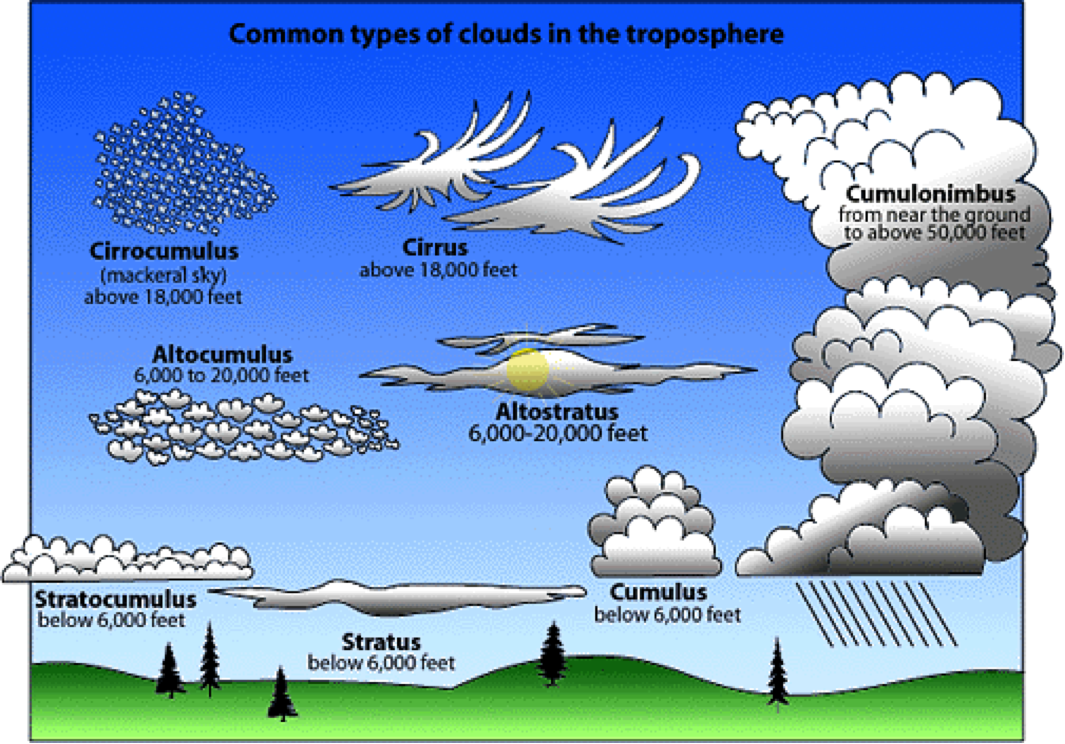
       During the direct instruction, Group #3 emphasized the types of precipitation and the different types of clouds. I think that this topic is a very large topic and is very flexible when developing lessons and pinpointing what concepts you are going to teach about. I like how my colleagues presented a classroom set of rules for the lesson and a weather booklet for the students to take notes in. I also liked how well the group worked together to present information and that every group member had their own part of the development section. Visuals were also present to show the different concepts that were being taught which I appreciate. I also enjoyed how in the closure of the instruction, the group created a moment for "Talk to Us" in which the students were able to define their favorite type of precipitation and two reasons why based on the information that they learned. 

Inquiry Instruction:
         During the inquiry instruction, Group #3 designed a lesson where the students would cycle into different experiments that revolved around the different types of precipitation that was covered in the direct lesson. Due to the lack of time, my colleagues had to regroup and make modifications to their lesson by having the different experiments without having the students move from one station to another. The students expressed that they were excited to engage into the experiments. I liked my colleagues used the tellagami to introduce the problem. It was creative. I also liked how each station had an expert to facilitate through the lesson. 

Constructive Criticism & Overall Opinion:
          I enjoyed the concept of both lessons. They were both constructed well and I wouldn't mind using this type of structure in my own classroom one day. For the direct instruction, I wish that there would have been either more visuals and less words or just less details in the presentation that the students had to follow to fill in the blanks of their weather booklets. There was a lot of information which could have created a sense of overload for the students. For the inquiry instruction, I wish that the students would've gone through the cycling of the experiments. It would have been quite the observation to see. Time management is key to completing these two lessons together in the time frame that we were given and I think that the group lost track of time, but they successfully managed to still complete the direct and inquiry instruction with the students. Good Job with your lessons, Group #3!  


Tuesday, February 21, 2017

Going Green with Glee

Going Green with Glee

           For Group #2's lesson, my fellow colleagues engaged the students into two lessons that intrigued the students into learning about different types of energy. What I liked about this concept was that it reinforces the importance of finding ways of producing energy that won't hinder the Earth, but continue to help it grow positively. Throughout this learning experience, I felt that the students were able to develop a comprehensible understanding about the different types of energies that were covered throughout these lessons. 

Direct Instruction:

         During direct instruction, Group #2 engaged the students into an explicit vocabulary instruction that consisted of a lot of interactive example learning opportunities about solar energy, wind energy, hydro-power energy, geothermal energy, and biomass. I enjoyed seeing how everything folded into place with consistency throughout the presentation. This group also used an acronym to help the students remember all five of the major types of renewable energy resources which I thought was a perfect idea considering how well the students responded to Group #1's acronym. I liked seeing how Group #2 promoted team work through their ideas such as most of the interactive examples on the Smart Board also consisted of the students getting up and working together to complete the task. There was a lot of opportunities in which the students were engaged into the direct instruction rather than just sitting there and only listening to an explicit instruction. I also liked the reinforced consistency of examples following the definitions of key terms for the academic vocabulary of this lesson. Students need those visual cues to help make connections and memories about the concept which I thought that this group nailed while teaching. 

Inquiry Instruction:


           For this lesson, the students were engaged into a web quest where each group had a different section of the web quest. Each group had a different problem and a different topic where at the end, all of the groups had different results from the others. I liked the idea of using a web quest because I thought about the jigsaw method. The students were becoming experts with their type of energy and at the end, were to present their findings to the rest of the peers. I enjoyed seeing how each group had a teacher candidate that was already an expert in that category and that acted as a facilitator for that group. I also enjoyed seeing how much time and dedication it took for the group to put the web quest together. Each group had a task on the web quest and it was obvious that a lot of work was put into it. I also thought that the use of iPads do view the web quest rather than having to share the Smart Board was a nifty idea because each group was able to focus on their part of the web quest. 

Constructive Criticism & Overall Opinion:
         I have to congratulate the group for maintaining classroom management and fully keeping the students engaged throughout both lessons. There wasn't a time that I noticed where the students seemed to get rowdy. The teachers had it under control. For the direct instruction, I wish that the transition from the closure into the independent practice could of been more defined. While I was observing, I thought that section seemed a bit rushed and I didn't notice the clear transition between the two sections of the lesson. For the inquiry instruction, I wish that the students could have engaged into a science experiment for the inquiry instruction rather than just research online. I liked the idea of a web quest, but for this scenario, the students were counting on doing a science experiment, but did not get the chance to do so. Great job with getting the job done, colleagues!


Tuesday, February 14, 2017

Discovering the Solar System & Climate Change

Discovering the Solar System & Climate Change

       For Group #1's lesson, my fellow colleagues taught about the solar system touching on very specific concepts and climate change. Personally, I was excited to see what the group had developed because the solar system as a whole has so many concepts and mind-blowing twists and turns that follow the story that teachers can have so many different approaches to teaching about the solar system, especially when referring to the solar system in science. 

Direct Instruction:
         The direct instruction consisted of teaching the students about specific terms that revolve around the solar system. One of the components of the direct instruction that I enjoyed was the implementation of an acronym to help the students to remember all of the planets in order.
The acronym that my colleagues used to provide an easy influence for students to remember the names of the planets was "My Very Educated Mother Just Served Us Nachos!" I praise my fellow colleagues for finding this type of acronym because it is something that the students can relate to, uses student-friendly language, and it is something that the students will be able to remember. I also enjoyed seeing how the lesson flowed even with a lot of information facts. There was unfamiliar terms that even perked my curiosity and I am grateful that the group defined the terms for the students. I also enjoyed seeing how the teachers worked together when there was complications and they helped each other maintain classroom management. When the students seemed to get riled up, the teachers were able to nip it in the bud and keep the classroom under control. The use of a Prezi presentation was also a nice touch because it kept the students looking at the screen due to the movements and effects of the Prezi software. 

Inquiry Instruction:
            The Inquiry Instruction that Group #1 brought to the after school program revolved around a science experiment called Melting Ice Caps which referred to the process of conserving ice. The problem for the students was presented through a Voki which I absolutely loved the idea and the students were instructed to use a variety of materials to try to prevent the ice from melting. Each group received different materials and collaborated with one another to try to conserve the ice. I liked the overall concept of using just an ice cube to represent the melting ice caps and how this inquiry lesson reflected back to the concept of climate change. Global warming is a major issue and I appreciate that this group highlighted global warming as an issue and a topic for making everyday earth day. I enjoyed seeing how the students used team work within their groups to record observations and while trying to solve the problem. 

Constructive Criticism & Overall Opinion:
          I enjoyed the general presentation of both lessons and I felt that as the first group to teach, everyone did a wonderful job. For the direct instruction, I wish that more visuals could of been integrated into the presentation such as diagrams and more images that reflect on the vocabulary terms that were being taught. There was a lot of vocabulary terms that were being taught and a lot of them were unfamiliar to me which I assume would be also unfamiliar to the students. Personally, I am a visual learner so having visuals would of facilitated with my own learning process and understanding of the terms. For the inquiry instruction, I wish that the concept of melting ice caps were covered more thoroughly before the initial experiment or during the direct instruction. I think that if the students had a better understanding of melting ice caps than they would have developed a finer understanding during the inquiry instruction. 

Friday, February 10, 2017

Fieldwork Chills

Fieldwork Chills

     The type of fieldwork that I am talking about does not relate to farming at all. The type that I'm talking about is the kind where teachers have to go and teach their lessons in front of a class of age-appropriate students. I'm graduating this semester and I still get nervous when I know that eventually I have to teach and my fellow colleagues as well as my professor will be observing the way that I speak and my teaching style. You would think that after all of these years, I would be used to teaching in front of a class which in a sense I am. I don't get nervous when I'm actually teaching elementary students, but what gives me anxiety is knowing that I am being observed by other future educators that could potentially be teaching the same topic I am in their future classrooms. 

Inquiry-Based Learning vs Direct Learning
        
        At the end of this course, I will be expected to turn in a lot of work including what I did for fieldwork. For fieldwork, I am in a group with five other members and we are expected to complete a direct instructional based lesson plan and an inquiry instructional based lesson plan. It seems simple, but it can get rather difficult having so many different people in the group with a variety of teaching and learning styles that people are comfortable with. As I have said in previous posts, the unit plan topic for my group is pollution and so our lessons will be based on teaching pollution. We are currently developing ideas on how to include detailed information about a broad topic in a way that the students won't be bored throughout the explicit instruction. It may also cause complications with developing an effective lesson being that the group of students that we are teaching range from the 3rd grade to the 6th grade. I'm sure that my group and I will be able to get the job done successfully. Our lessons will be performed last out of all of the groups, but save the best for last right? 
       

10 Easy Classroom Management Hacks

         I think that the most difficult part about incorporating the lesson plans are to make sure that all students are gaining a memorable experience considering the wide age range. Some students may be more advanced than others, so it's important to make sure that everyone is engaged into the lesson. The video above promotes some amazing ideas to maintaining classroom management which I think will be beneficial to this learning experience considering the wide age range between the students. Although these thoughts are running through my mind, I'm looking forward to seeing how my fellow colleagues in other groups are going to present their information, resources, and materials to the students. 

Tuesday, February 7, 2017

Analyzing All Kinds of Assessments

Analyzing All Kinds of Assessments

        Not only are there three different types of assessments that we learn to use as teachers, there are so many instructional strategies and methods that teachers can use to teach their students and prepare them for the assessments to come. I'm fond of strategies and methods that support direct instruction, indirect instruction, interactive instruction, and experimental learning. I believe in so many different types of instruction because not every child learns the same and as the teacher, it is my job to ensure that everyone has an equal opportunity to learn by embracing their learning styles and making accommodations or modifications according to the student's needs. 

Unfortunately, the cartoons to the left are correct in today's day and age. Teachers are being blamed for students' failure on assessments. This is why I believe that assessment implementation and instructional strategies or methods are relevant to the success of not only the teacher, but also to the student. The teacher needs to be prepared for any challenge that is thrown at them. The teacher also needs to be able to cover up their tracks and have evidence that supports their findings rather than only relying on major tests or summative assessments. When developing my unit plan, I will develop diagnostic, formative, and summative assessments. The diagnostic assessments are to pre-access the students knowledge and gain an understanding of what the students know before teaching the lesson. The formative assessments are the accessing process that is going on throughout the development and guided practice of the lesson. It doesn't even necessarily have to be hard copy evidence of the students' work, it can also be observations and mental notes that the teacher is forming when going through the lesson. The summative assessments are a brief evaluation to see what exactly the students learned after the assessment. 

When developing and implementing assessment strategies or lessons in the classroom, it's important to make observations throughout the experience.  Above are some observations that it is important to look out for when collecting data throughout different instructions. The bottom left hand corner displays examples of simple worksheets that teachers can use to record observations based on classroom behavior, student behavior, and teaching objectives.


Tuesday, January 31, 2017

Brainstorming Science-Oriented Unit Plans

Brainstorming Science-Oriented Unit Plans

       Although a Unit Plan appears to be simple enough to throw together, an effective teacher must organize and thoroughly plan out each lesson to assure that each student will undergo a memorable experience that will have an impact on their educational career and further enhance their knowledge. For Science Methods, it is obvious that we will be designing a unit plan that revolves around some sort of science-related topic or theme. Before starting our field work experience, we were given the general information that the theme we would be molding our lesson plans around revolved around the concept of Earth Day. After given the topic, it didn't take long to actually think and come to the conclusion that my group was going to tackle the issue of pollution and how recycling is important to acknowledge when taking care of the earth. 
        Pollution is an important concept to gather and bring to the attention of students. The lesson plans that my fellow colleagues and I are going to create revolve around air pollution, land pollution, water pollution, and recycling. All of these concepts complement one another and should be taught in discussion with each other so it would be a wise decision to discuss them in the same unit plan. The two types of lesson plans that my peers and I are going to create focus around direct instruction and inquiry/indirect instruction. Both of these types of instruction are necessary within a lesson plan to allow the students to think critically, collaborate, and gain knowledgeable information on the topic at hand. 

Bloom's Taxonomy for Teachers (Revised)

       The video above discusses the concepts, definitions, and examples of Bloom's Taxonomy. Bloom's Taxonomy is such an important, resourceful starting point when designing lesson plans. Bloom's Taxonomy reinforces the "action" that the students will engage in during each lesson plan and what the students should be expected to be doing. To get a better understanding of how to use Bloom's Taxonomy in lessons, I watched the above video that explained Bloom's Taxonomy in a way that teachers and future educators can interpret it. I like the way that Bloom's Taxonomy provides the user with verbs that are complex and that aid to adding specific emphasis on what the goals and objectives are for a lesson plan. 
It's important for teachers to be able to determine the differences between facts, concepts, and generalizations while understanding that each topic corresponds with another. It is a cycle within itself. Factual information develops concepts and concepts enhance the ability to form logical generalizations that also refer back to the factual information in time.
     Throughout my fieldwork experience, I am interested in jumping into the teaching experience. I'm looking forward to creating lesson plans: direct, inquiry, and cooperative around the concept of pollution. There are so many things that can be done to teach pollution and I can not express how excited I am to get this process underway. I know that it will be a lot of work to include all of elements of a completed unit plan, but I know with my dedication that I will be successful yet again!

Understanding the difference between a Lesson Plan and a Unit Plan would be the first step in developing my unit plan. I believe that this is an essential piece to creating an effective unit plan because it is important to know that the unit plan consists of multiple lesson plans and without lesson plans, there is not unit plan. The lesson plans need to flow with one another when referring to concepts. The major similarity between the two is that lesson plans and unit plans are both developed plans for teaching students information and the major difference between the two is that a lesson plan is just a single lesson while a unit plan is numerous lessons combined to be taught over a length of time.

Can I really create a unit plan? Do I have the capability to design and teach a full unit plan in science? I am confident that I can do it. I created unit plans for other school subjects, so why wouldn't I be able to make one for science? I think that I will be fully prepared to design and implement this unit plan by the end of this course, but if I had to do it right now, I think I would be equally as successful. I have knowledge on some science factors, but not all. Depending on the scientific topic, I may have to do research, but that won't prevent me from designing an effective unit plan.

Saturday, January 28, 2017

Looking Back at the Inner Scientific Me

Looking Back at the Inner Scientific Me

       Whenever I hear the word "Science", I always think about my time spent in Elementary, Middle, and High school classrooms. Science has been one of my favorite subjects in school ever since I can remember. It was a time in which I was able to engage into learning kinesthetically which is my primary choice of learning. I have not taught science before, but that is one of my goals by the end of this semester. I want to be able to successfully teach science with complete confidence in explaining factual information to students through the use of creative, eye-catching experiments. 
       In Elementary School is where I gained the love for science experiments. Whenever we had the opportunity to engage into an experiment, my teacher used to reinforce classroom management and focus with regards to the science experiment by saying "Put on your thinking caps" or "Are your thinking caps on?" As children, we were overly excited to put on our imaginary thinking caps and I truly believed that it helped for us to think outside of the box. One science experiment that I remember adoring was the butterfly life cycle. In third grade, my teacher had purchased larva caterpillars and gave one to every student in the class. We raised the caterpillars and recorded our data every day of the caterpillars life in a journal. Once that caterpillars had become butterflies, we even had a celebration in which we went outside and one by one our teacher let us release our butterflies to venture on their journey. I also liked doing the basic battery, wire, and light bulb circuit to see how many light bulbs we could actual manage to get to turn on. 
         In Middle School, I remember working primarily with microscopes for the majority of my science experiments. Most of the experiments revolved around examining cells up close. The first experiment had to do with the parts of a cell in an onion skin. This experiment made it easy for students to identify the parts of the cell and what they look like. The second microscope experiment was when the students had to pluck a strand of their own hair to look at the root of the hair particle. It was pretty interesting to see the exact components of one single strand of hair. The last experiment was when we put foot dye in the stem of a white carnation than examined the discoloring in the petals and stem using the microscope. By using the microscope, we were able to look at the world different. Below is a video that briefly shows what the first experiment looked like:

Onion Cell Microscope Slide Experiment

          High School is where science became more complicated in subjects like biology and chemistry. I hated dissecting things in high school. It was very disturbing for me and it made me nauseous, but I enjoyed working with chemicals and looking at chromosomes in High School. It was interesting to see how everything folded together to transform into something new in the world. My favorite experiment in High School was when I helped replant the school garden and we recycled water bottles by using them as a chain system for flower pots along the school windows. We did this activity for Earth Day and it was a relieving feeling to know that we can recycle something as easy as water bottles for a different purpose. Below is a video of how we created the hanging bottle garden:

How to Make a Hanging Disposable Bottle Garden

         With that said, I look forward to learning more about science and how to teach science effectively to students while gaining their attention and interest into the subject. Let's see what types of science experiences that await in the future!