Tuesday, February 28, 2017

Perceiving Precipitation

Perceiving Precipitation

      Group #3 ventured back to the concept of climate change and specifically singled out precipitation as their topic of choice for their lesson plans. I feel that precipitation is a good concept to discuss because there are a lot of science experiments that revolve around precipitation and there are a lot of types of precipitation that someone can develop a full unit plan just based on precipitation as the ultimate theme. 

Direct Instruction:

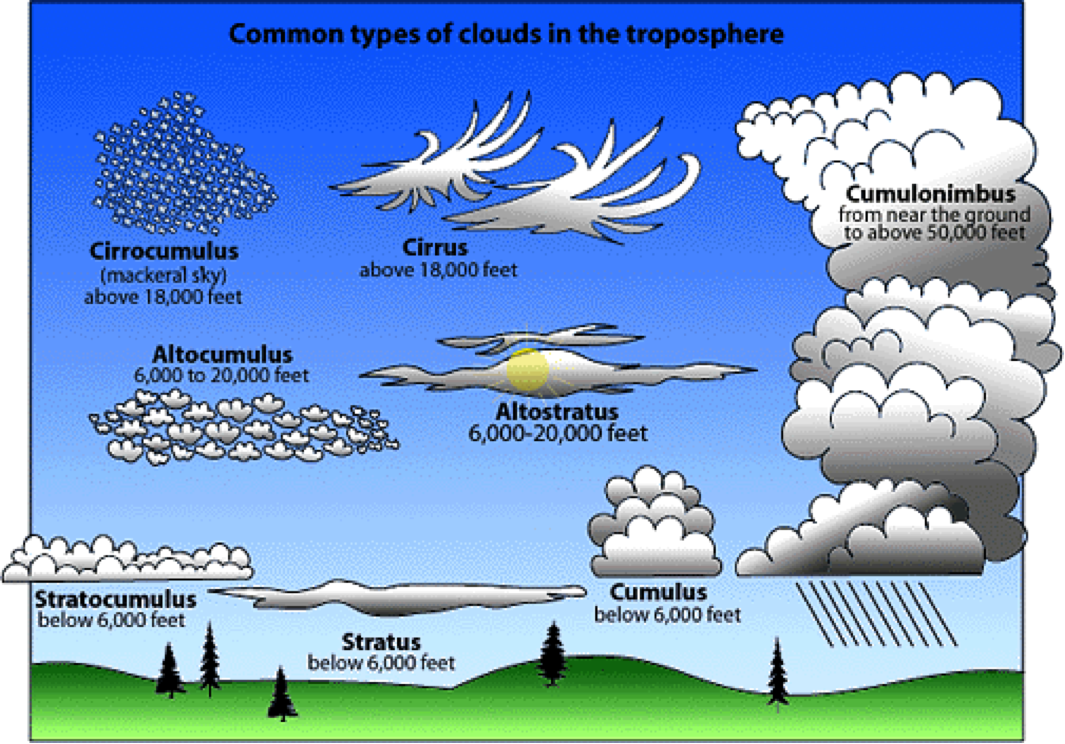
       During the direct instruction, Group #3 emphasized the types of precipitation and the different types of clouds. I think that this topic is a very large topic and is very flexible when developing lessons and pinpointing what concepts you are going to teach about. I like how my colleagues presented a classroom set of rules for the lesson and a weather booklet for the students to take notes in. I also liked how well the group worked together to present information and that every group member had their own part of the development section. Visuals were also present to show the different concepts that were being taught which I appreciate. I also enjoyed how in the closure of the instruction, the group created a moment for "Talk to Us" in which the students were able to define their favorite type of precipitation and two reasons why based on the information that they learned. 

Inquiry Instruction:
         During the inquiry instruction, Group #3 designed a lesson where the students would cycle into different experiments that revolved around the different types of precipitation that was covered in the direct lesson. Due to the lack of time, my colleagues had to regroup and make modifications to their lesson by having the different experiments without having the students move from one station to another. The students expressed that they were excited to engage into the experiments. I liked my colleagues used the tellagami to introduce the problem. It was creative. I also liked how each station had an expert to facilitate through the lesson. 

Constructive Criticism & Overall Opinion:
          I enjoyed the concept of both lessons. They were both constructed well and I wouldn't mind using this type of structure in my own classroom one day. For the direct instruction, I wish that there would have been either more visuals and less words or just less details in the presentation that the students had to follow to fill in the blanks of their weather booklets. There was a lot of information which could have created a sense of overload for the students. For the inquiry instruction, I wish that the students would've gone through the cycling of the experiments. It would have been quite the observation to see. Time management is key to completing these two lessons together in the time frame that we were given and I think that the group lost track of time, but they successfully managed to still complete the direct and inquiry instruction with the students. Good Job with your lessons, Group #3!  


Tuesday, February 21, 2017

Going Green with Glee

Going Green with Glee

           For Group #2's lesson, my fellow colleagues engaged the students into two lessons that intrigued the students into learning about different types of energy. What I liked about this concept was that it reinforces the importance of finding ways of producing energy that won't hinder the Earth, but continue to help it grow positively. Throughout this learning experience, I felt that the students were able to develop a comprehensible understanding about the different types of energies that were covered throughout these lessons. 

Direct Instruction:

         During direct instruction, Group #2 engaged the students into an explicit vocabulary instruction that consisted of a lot of interactive example learning opportunities about solar energy, wind energy, hydro-power energy, geothermal energy, and biomass. I enjoyed seeing how everything folded into place with consistency throughout the presentation. This group also used an acronym to help the students remember all five of the major types of renewable energy resources which I thought was a perfect idea considering how well the students responded to Group #1's acronym. I liked seeing how Group #2 promoted team work through their ideas such as most of the interactive examples on the Smart Board also consisted of the students getting up and working together to complete the task. There was a lot of opportunities in which the students were engaged into the direct instruction rather than just sitting there and only listening to an explicit instruction. I also liked the reinforced consistency of examples following the definitions of key terms for the academic vocabulary of this lesson. Students need those visual cues to help make connections and memories about the concept which I thought that this group nailed while teaching. 

Inquiry Instruction:


           For this lesson, the students were engaged into a web quest where each group had a different section of the web quest. Each group had a different problem and a different topic where at the end, all of the groups had different results from the others. I liked the idea of using a web quest because I thought about the jigsaw method. The students were becoming experts with their type of energy and at the end, were to present their findings to the rest of the peers. I enjoyed seeing how each group had a teacher candidate that was already an expert in that category and that acted as a facilitator for that group. I also enjoyed seeing how much time and dedication it took for the group to put the web quest together. Each group had a task on the web quest and it was obvious that a lot of work was put into it. I also thought that the use of iPads do view the web quest rather than having to share the Smart Board was a nifty idea because each group was able to focus on their part of the web quest. 

Constructive Criticism & Overall Opinion:
         I have to congratulate the group for maintaining classroom management and fully keeping the students engaged throughout both lessons. There wasn't a time that I noticed where the students seemed to get rowdy. The teachers had it under control. For the direct instruction, I wish that the transition from the closure into the independent practice could of been more defined. While I was observing, I thought that section seemed a bit rushed and I didn't notice the clear transition between the two sections of the lesson. For the inquiry instruction, I wish that the students could have engaged into a science experiment for the inquiry instruction rather than just research online. I liked the idea of a web quest, but for this scenario, the students were counting on doing a science experiment, but did not get the chance to do so. Great job with getting the job done, colleagues!


Tuesday, February 14, 2017

Discovering the Solar System & Climate Change

Discovering the Solar System & Climate Change

       For Group #1's lesson, my fellow colleagues taught about the solar system touching on very specific concepts and climate change. Personally, I was excited to see what the group had developed because the solar system as a whole has so many concepts and mind-blowing twists and turns that follow the story that teachers can have so many different approaches to teaching about the solar system, especially when referring to the solar system in science. 

Direct Instruction:
         The direct instruction consisted of teaching the students about specific terms that revolve around the solar system. One of the components of the direct instruction that I enjoyed was the implementation of an acronym to help the students to remember all of the planets in order.
The acronym that my colleagues used to provide an easy influence for students to remember the names of the planets was "My Very Educated Mother Just Served Us Nachos!" I praise my fellow colleagues for finding this type of acronym because it is something that the students can relate to, uses student-friendly language, and it is something that the students will be able to remember. I also enjoyed seeing how the lesson flowed even with a lot of information facts. There was unfamiliar terms that even perked my curiosity and I am grateful that the group defined the terms for the students. I also enjoyed seeing how the teachers worked together when there was complications and they helped each other maintain classroom management. When the students seemed to get riled up, the teachers were able to nip it in the bud and keep the classroom under control. The use of a Prezi presentation was also a nice touch because it kept the students looking at the screen due to the movements and effects of the Prezi software. 

Inquiry Instruction:
            The Inquiry Instruction that Group #1 brought to the after school program revolved around a science experiment called Melting Ice Caps which referred to the process of conserving ice. The problem for the students was presented through a Voki which I absolutely loved the idea and the students were instructed to use a variety of materials to try to prevent the ice from melting. Each group received different materials and collaborated with one another to try to conserve the ice. I liked the overall concept of using just an ice cube to represent the melting ice caps and how this inquiry lesson reflected back to the concept of climate change. Global warming is a major issue and I appreciate that this group highlighted global warming as an issue and a topic for making everyday earth day. I enjoyed seeing how the students used team work within their groups to record observations and while trying to solve the problem. 

Constructive Criticism & Overall Opinion:
          I enjoyed the general presentation of both lessons and I felt that as the first group to teach, everyone did a wonderful job. For the direct instruction, I wish that more visuals could of been integrated into the presentation such as diagrams and more images that reflect on the vocabulary terms that were being taught. There was a lot of vocabulary terms that were being taught and a lot of them were unfamiliar to me which I assume would be also unfamiliar to the students. Personally, I am a visual learner so having visuals would of facilitated with my own learning process and understanding of the terms. For the inquiry instruction, I wish that the concept of melting ice caps were covered more thoroughly before the initial experiment or during the direct instruction. I think that if the students had a better understanding of melting ice caps than they would have developed a finer understanding during the inquiry instruction. 

Friday, February 10, 2017

Fieldwork Chills

Fieldwork Chills

     The type of fieldwork that I am talking about does not relate to farming at all. The type that I'm talking about is the kind where teachers have to go and teach their lessons in front of a class of age-appropriate students. I'm graduating this semester and I still get nervous when I know that eventually I have to teach and my fellow colleagues as well as my professor will be observing the way that I speak and my teaching style. You would think that after all of these years, I would be used to teaching in front of a class which in a sense I am. I don't get nervous when I'm actually teaching elementary students, but what gives me anxiety is knowing that I am being observed by other future educators that could potentially be teaching the same topic I am in their future classrooms. 

Inquiry-Based Learning vs Direct Learning
        
        At the end of this course, I will be expected to turn in a lot of work including what I did for fieldwork. For fieldwork, I am in a group with five other members and we are expected to complete a direct instructional based lesson plan and an inquiry instructional based lesson plan. It seems simple, but it can get rather difficult having so many different people in the group with a variety of teaching and learning styles that people are comfortable with. As I have said in previous posts, the unit plan topic for my group is pollution and so our lessons will be based on teaching pollution. We are currently developing ideas on how to include detailed information about a broad topic in a way that the students won't be bored throughout the explicit instruction. It may also cause complications with developing an effective lesson being that the group of students that we are teaching range from the 3rd grade to the 6th grade. I'm sure that my group and I will be able to get the job done successfully. Our lessons will be performed last out of all of the groups, but save the best for last right? 
       

10 Easy Classroom Management Hacks

         I think that the most difficult part about incorporating the lesson plans are to make sure that all students are gaining a memorable experience considering the wide age range. Some students may be more advanced than others, so it's important to make sure that everyone is engaged into the lesson. The video above promotes some amazing ideas to maintaining classroom management which I think will be beneficial to this learning experience considering the wide age range between the students. Although these thoughts are running through my mind, I'm looking forward to seeing how my fellow colleagues in other groups are going to present their information, resources, and materials to the students. 

Tuesday, February 7, 2017

Analyzing All Kinds of Assessments

Analyzing All Kinds of Assessments

        Not only are there three different types of assessments that we learn to use as teachers, there are so many instructional strategies and methods that teachers can use to teach their students and prepare them for the assessments to come. I'm fond of strategies and methods that support direct instruction, indirect instruction, interactive instruction, and experimental learning. I believe in so many different types of instruction because not every child learns the same and as the teacher, it is my job to ensure that everyone has an equal opportunity to learn by embracing their learning styles and making accommodations or modifications according to the student's needs. 

Unfortunately, the cartoons to the left are correct in today's day and age. Teachers are being blamed for students' failure on assessments. This is why I believe that assessment implementation and instructional strategies or methods are relevant to the success of not only the teacher, but also to the student. The teacher needs to be prepared for any challenge that is thrown at them. The teacher also needs to be able to cover up their tracks and have evidence that supports their findings rather than only relying on major tests or summative assessments. When developing my unit plan, I will develop diagnostic, formative, and summative assessments. The diagnostic assessments are to pre-access the students knowledge and gain an understanding of what the students know before teaching the lesson. The formative assessments are the accessing process that is going on throughout the development and guided practice of the lesson. It doesn't even necessarily have to be hard copy evidence of the students' work, it can also be observations and mental notes that the teacher is forming when going through the lesson. The summative assessments are a brief evaluation to see what exactly the students learned after the assessment. 

When developing and implementing assessment strategies or lessons in the classroom, it's important to make observations throughout the experience.  Above are some observations that it is important to look out for when collecting data throughout different instructions. The bottom left hand corner displays examples of simple worksheets that teachers can use to record observations based on classroom behavior, student behavior, and teaching objectives.